
The origins of the Ventspils narrow‑gauge railway date back to World War I, when the German Army constructed several military field railways (Heeresfeldbahn) across occupied Latvian territory in 1916. These 600 mm‑gauge railways were designed to be quickly built, dismantled, and relocated as needed, and they connected Ventspils with fishing villages along the coast. Over the following decades, this network played a vital role in the cultural and economic development of northern Kurzeme, transporting passengers, agricultural products, and timber year‑round. [militaryhe…urism.info]
By the mid‑20th century, portions of the narrow‑gauge system had become preserved as heritage rather than active transport corridors. The foundations of what is now the Seaside Open-Air Museum in Ventspils began in 1954, when its founder Andrejs Šulcs brought early museum artefacts—including a narrow‑gauge locomotive—to the site. The museum later expanded its exhibits and track layouts to showcase the region’s railway heritage, ultimately establishing one of the Baltic’s most significant surviving narrow‑gauge railway attractions. [industrial…ritage.pro]
The museum’s railway network continued to develop, especially through major investment projects in the 2000s. A comprehensive expansion plan approved in 2007–2008 enabled the construction of new track, technical lines, station replicas, depots, and rail crossings. Supported by EU funding, this project culminated in 2010 with the completion of an extended 2 km line and a range of restored or reconstructed infrastructure, capturing the appearance and character of Latvia’s “golden age” of narrow‑gauge railways in the 1920s–1930s. [muzejs.ventspils.lv]
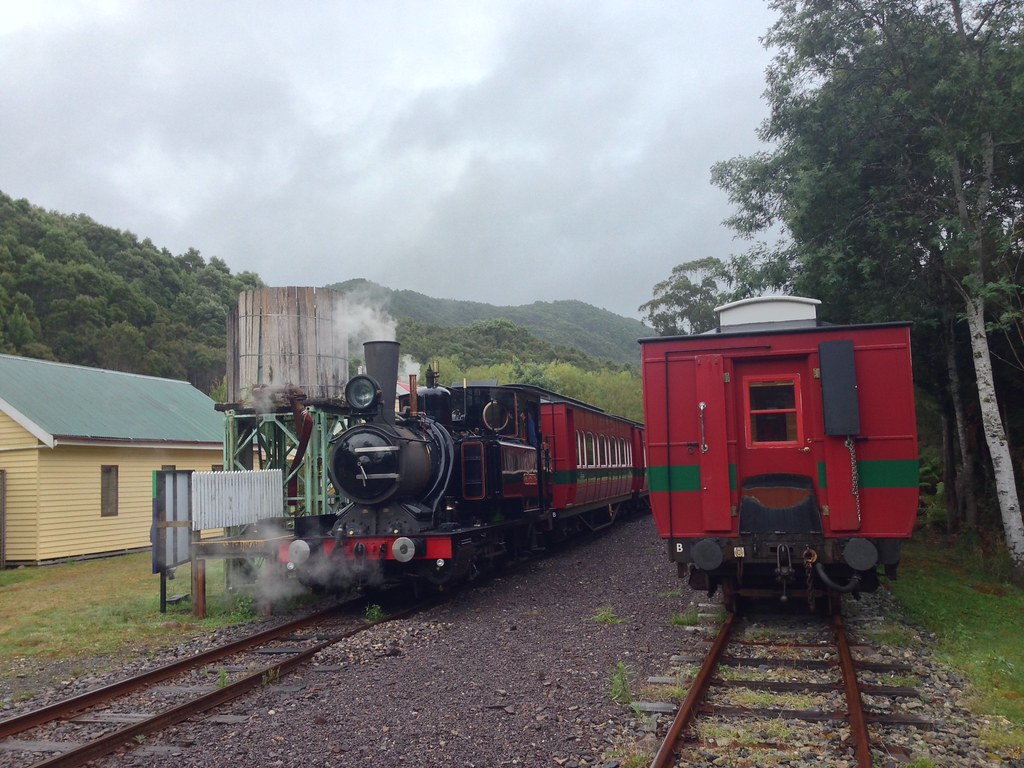
Today, the museum operates the beloved Mazbānītis narrow‑gauge train—a restored 1916 steam locomotive with historically inspired passenger and open‑air cars. It runs on two scenic lines: the 1.4 km Circle Line and the 3.0 km Mountain Line, the latter completed as part of the expanded museum railway project. These routes take visitors through forested dunes, past level crossings with modern signalling, and between faithfully recreated station buildings and depots. The attraction blends historical authenticity with an engaging visitor experience. [visitventspils.com]
The Ventspils narrow‑gauge railway thus stands today as both a preserved fragment of European wartime engineering and a major cultural tourism site. It reflects more than a century of Latvian railway history—from military logistics and rural connectivity to heritage preservation and modern museum development. Through its rolling stock, reconstructed infrastructure, and immersive visitor routes, it continues to celebrate the legacy of Latvia’s narrow‑gauge “mazbānītis” railways. [gotobaltic.com]
Sources:
Ventspils Muzejs; Military Heritage Tourism; Industrial Heritage for Tourism; VisitVentspils; Gotobaltic.com; Wikipedia.
(All specific citations appear inline.)
Statement: This text was generated using AI.