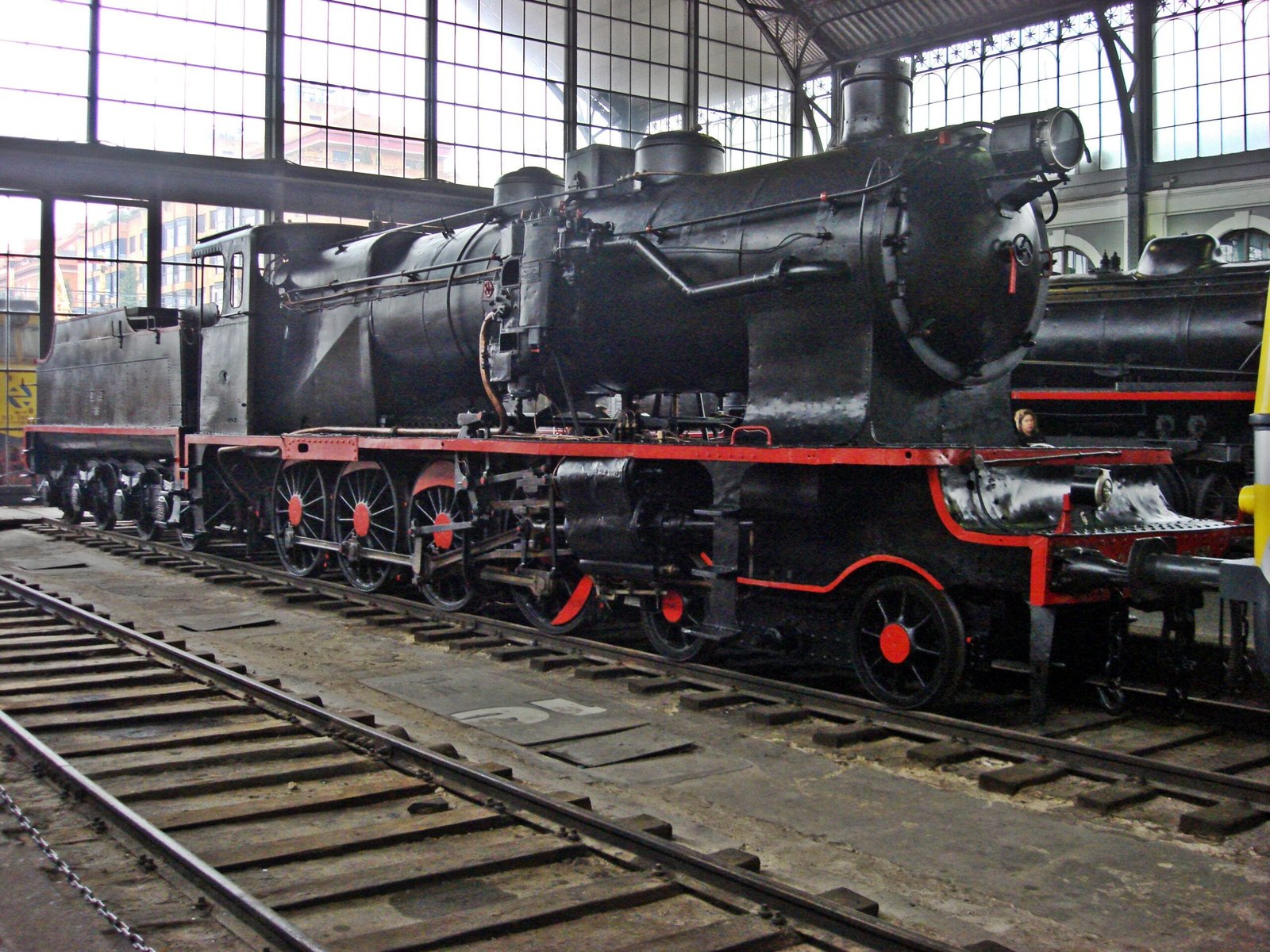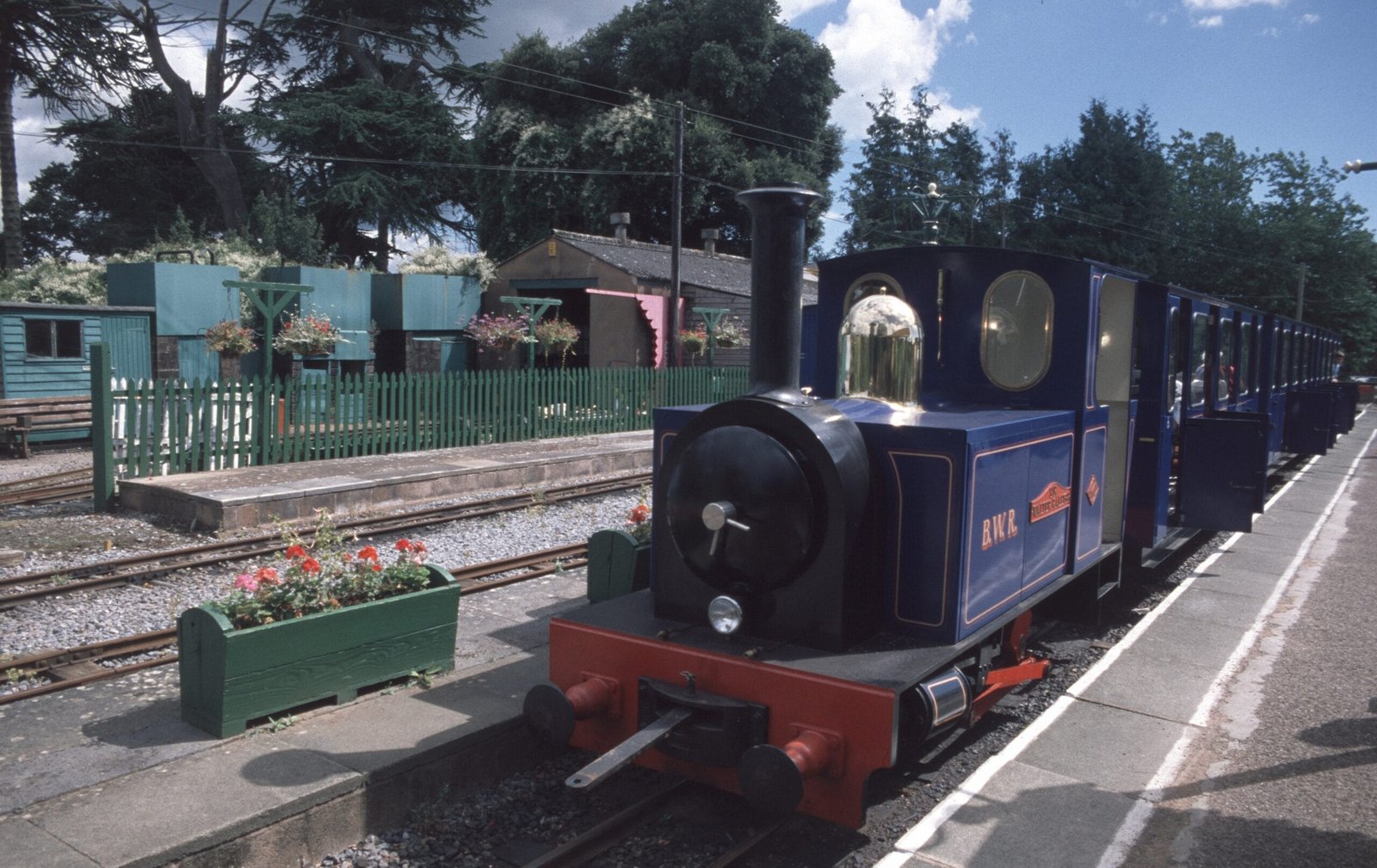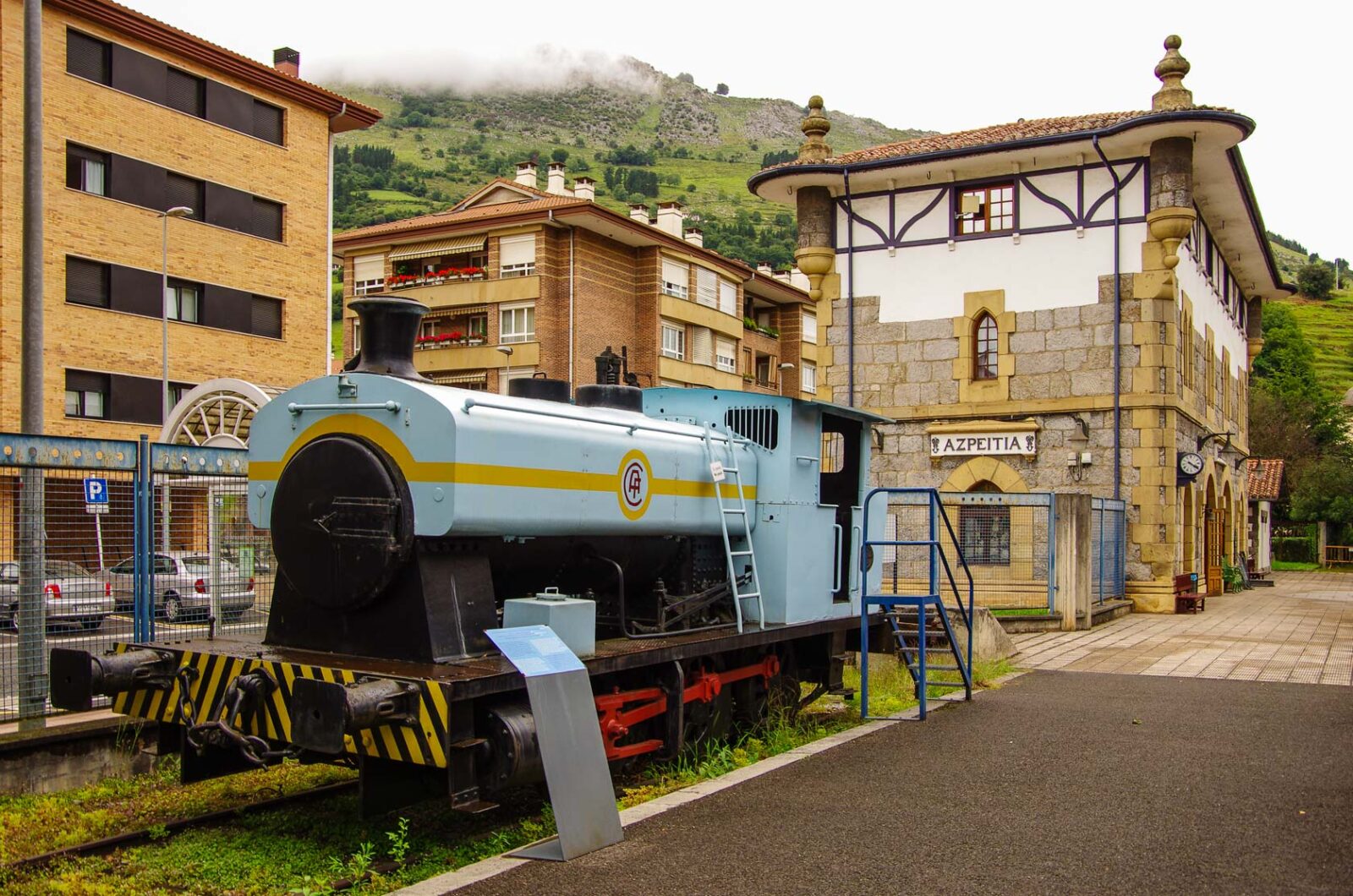
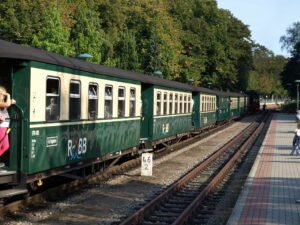
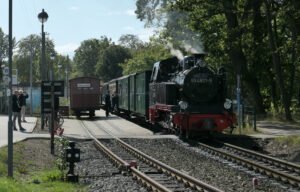
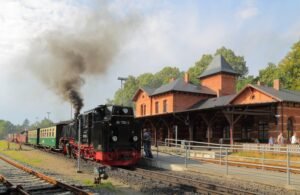
The origins of the Rügensche BäderBahn trace back to the late 19th century, when the Prussian Kleinbahn Act of 1892 spurred the construction of economical narrow‑gauge railways across rural regions. On the island of Rügen, this led to the creation of an extensive 750 mm network between 1895 and 1899, operated by the Rügensche Kleinbahnen Aktiengesellschaft. By 1918, the system reached its greatest extent, spanning nearly 100 kilometres. [ruegensche…derbahn.de]
The first section of what is now the Rügensche BäderBahn opened on 22 July 1895, running between Putbus and Binz, which remains in operation today. By December 1896, the operator had expanded its network to over 104 kilometres, including routes from Altefähr to Göhren and from Altenkirchen to Bergen via the Wittow Ferry. This early period saw significant passenger and freight activity, although some lines—such as the military‑driven route to the Bug naval air station—were later abandoned. [everything…ined.today]
During the early 20th century, the network faced major challenges, including wartime disruptions, inflation, and shifting administrative structures. Ownership transitions included the Kleinbahnabteilung of the Pomeranian provincial association in 1910 and later the Pommersche Landesbahnen in 1940. Despite severe economic strains, measures such as strict austerity and even the use of localised “notgeld” helped sustain operations through turbulent decades. [ruegensche…derbahn.de]
After the Second World War, the railway became part of the East German state railway in 1949. Over subsequent decades, many sections of the original network were closed, with major abandonments occurring in 1967, 1968, and 1970. In 1996, surviving lines came under the care of the newly established Rügensche Kleinbahn GmbH & Co., which continued to preserve the historic character of the line despite the broader contraction of the network. [everything…ined.today]
A major revival began in 2008, when the Eisenbahn‑Bau‑ und Betriebsgesellschaft Pressnitztalbahn assumed ownership and rebranded the railway as the Rügensche BäderBahn. Since then, the line from Putbus to Göhren has flourished as a popular steam‑operated heritage route and an important part of the island’s public transport system. Rising passenger numbers and strong tourist interest have cemented its place as a distinctive cultural and historical attraction on Rügen. [steam-rout…saxony.com], [dokumentat…schung.org]
This history was generated using AI.