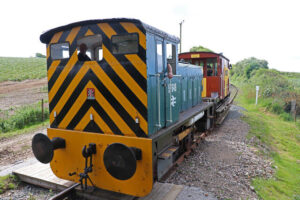
The history of the Helston Railway is a story of ambition, service, and revival, deeply rooted in the landscape and economy of Cornwall.
The railway was first proposed in 1879 to connect the market town of Helston with the main Cornish railway network at Gwinear Road, primarily to serve the agricultural district of south-west Cornwall. After overcoming financial and engineering challenges—including the construction of a viaduct over the River Cober—the Helston Railway Company opened the line on 9 May 1887. The railway quickly became vital for local farmers and miners, transporting goods and connecting Helston to the rest of the country. In 1898, the line was absorbed by the Great Western Railway (GWR), which expanded its role by introducing a pioneering road connection service from Helston station to the Lizard Peninsula, the first of its kind in the world. This innovation reflected the railway’s adaptability and its importance in linking remote communities with the national network.
During its early years, the Helston Railway thrived, carrying both agricultural produce and summer tourists. The line’s success was bolstered by the growth of local quarries, which provided jobs for redundant miners and lucrative freight for the railway. However, the rise of road transport in the early 20th century began to challenge the railway’s dominance. Despite this, the line remained operational, playing a crucial role during World War II when goods traffic, particularly for the Admiralty, increased significantly at Nancegollan.
The post-war period brought declining fortunes. Passenger numbers dwindled as private car ownership grew, and the Beeching Report of the 1960s sealed the railway’s fate. Passenger services ended on 5 November 1962, and goods traffic ceased in October 1964. The tracks were lifted shortly afterward, marking the end of an era for Helston and its surrounding communities. The closure was a significant loss, as the railway had been a lifeline for the region for over 75 years.
The story did not end there. In 2002, a group of enthusiasts formed the Helston Railway Preservation Society with a bold vision: to restore and reopen a section of the branch line as a heritage railway. Through sheer determination and volunteer effort, the society relaunched passenger services in 2011, initially operating on a short stretch of track. The project has since grown, with ongoing work to extend the line and rebuild infrastructure, including the iconic Lowertown Viaduct. The railway has won multiple awards, including the prestigious Heritage Railway of the Year in 2010, recognizing its dedication to preserving Cornwall’s railway heritage.
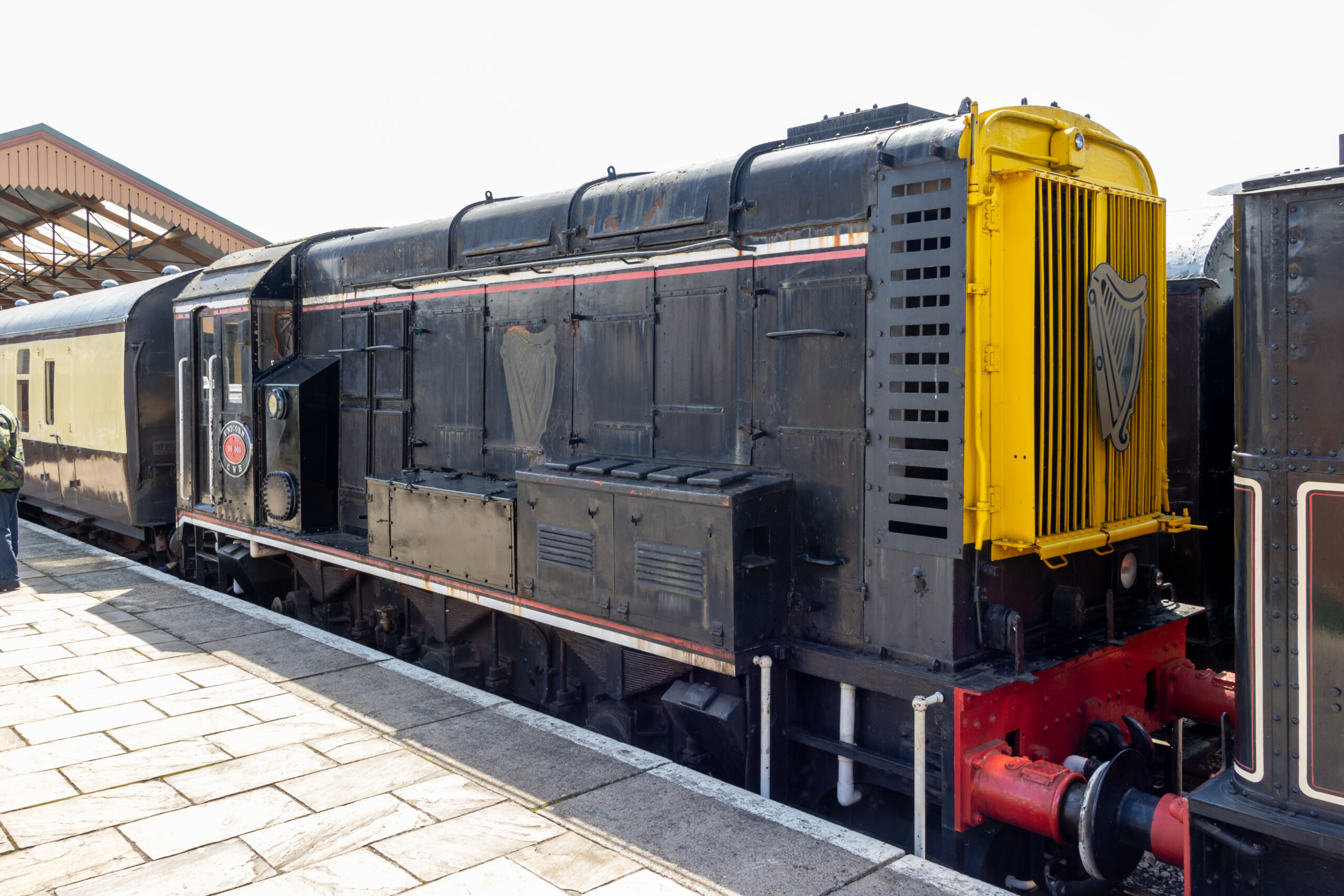
Today, the Helston Railway operates as a living museum, offering visitors a chance to experience the golden age of steam and diesel travel. Run entirely by volunteers, the railway continues to expand, with plans to extend the track further towards Helston and enhance its facilities. It stands as a testament to the enduring appeal of Britain’s railway history and the power of community spirit.
This history was generated using AI, based on information from reliable sources.