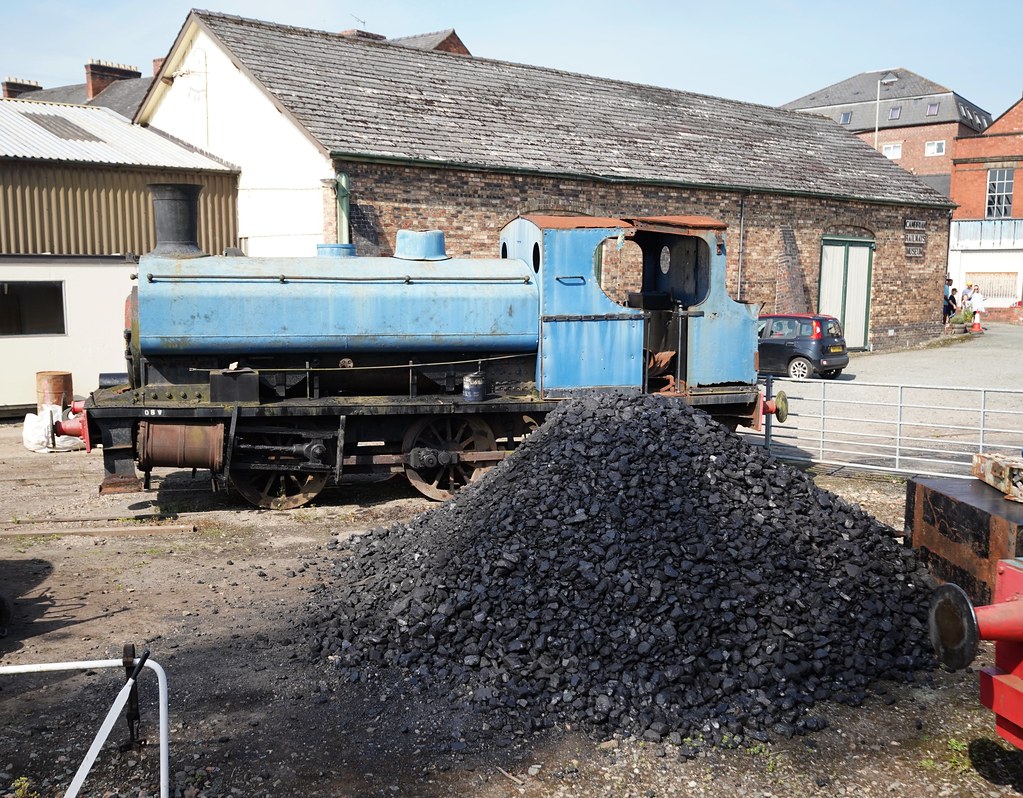
The Didcot Railway Centre is a living museum and preservation site dedicated to the legacy of the Great Western Railway (GWR), located in Didcot, Oxfordshire. The site’s history begins in the mid-19th century, when Didcot was established as a key junction on the GWR’s main line between London and Bristol. The location was chosen for its strategic position, roughly halfway between the two cities, making it an ideal spot for a maintenance and stabling facility. The original engine shed, built in 1932, became a hub for steam locomotive operations, complete with a turntable, coaling stage, and repair shops. This infrastructure played a vital role in the GWR’s operations until the decline of steam in the 1960s, when the shed closed in 1965 as diesel locomotives took over.
The transformation of Didcot into a railway heritage centre began in the late 1960s, driven by the passion of railway enthusiasts. In 1967, the Great Western Society—a group formed in 1962 by four schoolboys and later expanded into a formal organization—was offered the use of the redundant engine shed. The Society moved in with just three locomotives and a handful of carriages, marking the humble beginnings of what would become one of the UK’s most significant railway preservation sites. Over the following decades, volunteers and members worked tirelessly to restore the site, acquiring more locomotives, rolling stock, and artefacts, and transforming the shed into a working museum.
Today, the Didcot Railway Centre spans 21 acres and is home to the largest collection of GWR locomotives, carriages, and wagons in the world. The centre operates as both a museum and an active engineering site, where historic locomotives are restored and maintained. Visitors can explore the original 1932 engine shed, a carriage shed, and a transfer shed featuring a unique broad-gauge exhibit—a nod to Isambard Kingdom Brunel’s pioneering broad-gauge railway. The site also includes three short lengths of running track, allowing for steam and diesel train rides, and hosts popular events such as steam days and diesel galas.
The centre’s significance extends beyond its collection. It serves as an educational resource, offering insights into the evolution of railway technology from Brunel’s broad gauge to the modern era. The site’s authentic atmosphere is enhanced by its surroundings: it is entirely encircled by active mainline railway tracks, with public access provided via a subway from Didcot Parkway station. This connection to the present-day rail network underscores the centre’s role as a bridge between past and present, where the sights, sounds, and smells of steam railroading are preserved for future generations.
Didcot Railway Centre continues to grow and adapt, driven by the dedication of its volunteers and the support of its members. Recent projects include the construction of new-build locomotives, such as the “Firefly” and “Saint” classes, which recreate lost GWR designs using modern engineering techniques. The centre remains a popular destination for families, enthusiasts, and filmmakers, having featured in productions like Sherlock Holmes: A Game of Shadows and The Elephant Man. As a living museum, it not only preserves the heritage of the Great Western Railway but also inspires a new appreciation for the golden age of steam.
This history was generated using AI and draws from publicly available sources, including the Didcot Railway Centre’s official website, Wikipedia, and heritage railway resources.