Chasewater Railway began as a vision in 1959, when Noel Draycott founded the Railway Preservation Society (RPS) to unite railway enthusiasts across the UK. The West Midlands District of the RPS was the first to form, gathering in Stafford to preserve standard gauge railways at a time when British Railways still operated steam locomotives. Early efforts focused on acquiring rolling stock and surveying potential sites for restoration.
By the early 1960s, the group had established a base at Hednesford, where they began restoring donated coaches and collecting railway relics. Although several branch lines were considered for operation, the Midland Railway’s Aldridge–Brownhills route ultimately became the most viable. This line, once part of the National Coal Board’s colliery network, offered a manageable scope for preservation and was situated within Chasewater Country Park.
The railway faced significant challenges in the 1980s, including dwindling volunteer numbers and financial strain. At one point, operations nearly ceased, and rolling stock had to be sold to stay afloat. However, a dedicated core of volunteers kept the project alive, gradually rebuilding infrastructure and expanding the line. The construction of the M6 Toll motorway in the early 2000s forced the relocation of Brownhills West station, which was rebuilt with improved facilities and a heritage centre.
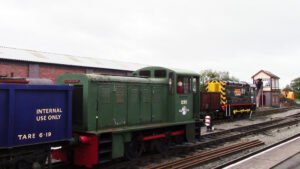
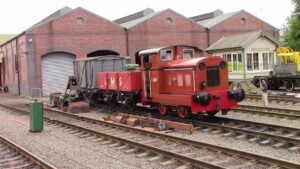
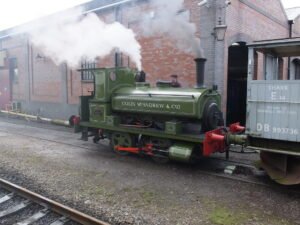
In 2007, the railway extended its route to Chasetown Church Street, completing the Chasetown Extension Railway. This marked a major milestone, allowing the line to operate over two miles of track around Chasewater Lake. The railway also developed its museum and rolling stock collection, which includes industrial steam and diesel locomotives, vintage carriages, and the UK’s only preserved rake of MGR wagons.
Chasewater Railway’s efforts were formally recognized in 2016 when it received the Queen’s Award for Voluntary Service. Today, it stands as a testament to grassroots preservation, offering scenic rides, educational exhibits, and a celebration of Britain’s industrial railway heritage. The railway continues to thrive thanks to its volunteers and its unique setting within a country park.
This historical summary was generated using AI and draws on information from Chasewater Railway’s official history, Wikipedia, and Railway Magazine.